Kindergarten

Curriculum
Educated through the pillars of faith and reason, our elementary students gain a solid foundation of knowledge to support them throughout their educational careers. Every grade level advances the student's proficiency in mathematics, science, social studies, and reading/language arts—all of which are supplemented by our co-curriculars.
-
Letters and their sounds
-
Write letters
-
Understand cause and effect
-
Retell stories
-
Write first and last name
-
Draw, dictate, and write
-
Conventions of print (spacing, capitalization, and punctuation)
-
Singular vs. plural nouns
-
Recognize common types of text
-
Read to and with others
-
Recite and produce rhyming
-
Isolate beginning, middle, and ending sounds
-
Count syllables
-
Understand the parts of a book
-
Read emergent text with fluency and understanding
-
Read 25 high frequency words
-
-
Bible stories
-
Identify Jesus, Mary, and Joseph
-
Lives of the saints
-
Participate in Mass
-
The Sacrament of Baptism
-
Celebrating the Liturgical Church Year
-
Learn prayers: The Sign of the Cross, St. Michael the Archangel, Hail Mary, Our Father, Glory Be, Guardian Angel, and mealtime prayers
-
Pray the rosary
-
Making moral choices
-
Growing in virtue
-
We are made in the image of God and should care for each other
-
-
Count to 100 by 1s, 5s, and 10s
-
Read and write numbers to 30
-
One-to-one correspondence
-
Days of the week and months of the year
-
Identify coins
-
Sort objects and classify according to attributes
-
Construct and interpret graphs
-
Sums and differences using concrete objects
-
-
Nomads: The Earliest People
-
Egyptians on the Nile River
-
The First Writing
-
The New Kingdom of Egypt
-
The First Sumerian Dictator
-
The Jewish People
-
Hammurabi and the Babylonians
-
The Israelites Leave Egypt
-
-
Four seasons and weather
-
Reduce, reuse, recycle
-
Comparing living vs. nonliving
-
Physical properties of matter
-
Making observations and predictions
-
1st Grade
-
Build reading skills through phonics, fluency, and comprehension
-
Expand vocabulary and develop writing skills
-
Practice speaking and listening respectfully in discussions and presentations
-
Begin research skills
-
-
Retell Bible Narratives of Salvation History and the life of Jesus
-
Learn an example of Holiness from the Lives of the Saints.
-
Identify the three persons of the Holy Trinity.
-
Learn Basic prayers and pray the Rosary.
-
Attend weekly Mass and assembly with school family.
-
Go to Adoration Weekly.
-
-
Build strong number sense
-
Develop Addition and Subtraction skills
-
Explore shapes
-
Use data and measurement
-
Recognize and extend patterns
-
-
Ancient Egypt
-
-
Explore Earth’s Surface
-
Learn about fresh & salt water, earth layers, and how fossils form
-
Investigate living things
-
Describe life cycles and food Chains of plants and animals
-
2nd Grade
-
Read texts and actively listen during read aloud that reflect Catholic culture and worldview.
-
Master first grade phonological awareness skills and demonstrate understanding of multisyllabic words and their parts orally.
-
Know and apply grade-level phonics and word analysis skills in decoding and encoding words
-
Learn a scope and sequence of phonics skills from simple to more complex and engage in meaningful practice.
-
Read with fluency and accuracy for comprehension; self-correct
-
Identify key events, main ideas, and core elements to stories (both fiction and non-fiction)
-
Read various genres and identify structure of texts
-
Use personal knowledge to connect with textual information
-
Author’s purpose, similarities/differences of texts and characters
-
Reading graphs and written directions
-
Use reference materials: dictionary, thesaurus, glossary, table of contents, and online reference sources
-
Writing: sentence and paragraph structure and formation- nonfiction and fiction writing- opinions, descriptions, narrative stories, research, letters, poems, etc.
-
Correct grammar and spelling usage
-
Apply alphabetical sequencing
-
Increasing vocabulary through meaningful practice
-
Understand parts of speech
-
Create various types of writing, edit and revise written work, use descriptive language and develop voice within writing
-
Demonstrate the ability to use conventions of print: capitalization, punctuation, correct letter formation in print and cursive
-
-
Learn about the sacraments, with emphasis on Sacraments of Initiation
-
Prepare for and receive Reconciliation as a class
-
Vocational Church community: pope, bishops, priests, deacons, nuns, laity, and their roles
-
Liturgical seasons and why we celebrate them
-
Saints and history of the Church
-
Bible stories/parts of the Bible
-
The roles of Mary and Joseph
-
Learn new prayers, particularly the Morning Offering and Act of Contrition
-
Weekly Adoration
-
Weekly Mass
-
Understand the parts of the Mass
-
The Incarnation and its role in changing the worldview of God
-
Show how Jesus founded the Church by establishing its leaders, sacraments, and calling everyone to become disciples.
-
Imitate Christ in our love for others by recognizing our gifts and talents and those of others
-
Friendship, forgiveness, and learning to live a virtuous life
-
Service projects and interactions with Broomfield community
-
-
Master addition and subtraction to 20
-
Regrouping addition and subtraction to the 100's place, numbers to 1000
-
Number sense: problem solving, using clues and deductive reasoning, communitive/associative properties
-
Fractions and Probability
-
Time and money
-
Geometry: solid and plane figures, shapes, their elements, and manipulation of shapes
-
Estimating and measuring using both customary and metric systems for weight, liquid, and length
-
Data and graphing
-
Multiplication- begin repeated addition and facts of 2,5,10
-
Place value
-
Introduction to division
-
-
Review of Greek History from 1st grade
-
Roman History
-
Identify geography of Rome and the ancient world
-
Roman government, social classes, and the change from republic to empire
-
Roman inventions and their effects on later civilizations
-
Jesus’ Incarnation and why he came during this time
-
Jesus’ Death and Resurrection and its effect on the growth of the Catholic Christian faith
-
The timeline of Jesus’ life using the rosary
-
The persecution of Christians through Roman emperors, the apostles’ lives after Jesus’ death
-
Martyrs during the Roman times
-
-
Brief review of animal life cycles, habitats, and food chains
-
Earth, Moon, and Sun unit: solar system, moon phases, continents, oceans and seasons, pollution and recycling
-
The Human Body: ways to stay healthy and safe, major organs and organ systems
-
Force and Motion Unit: types of forces, friction, apply processes to add and take away friction, the effects of gravity.
-
All units incorporate the scientific process, experiments, recording data, and creating graphs to show information.
-
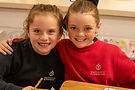
3rd Grade
-
Sentence structure, paragraph writing, grammar and punctuation
-
Parts of speech
-
Types of writing: narratives, poetry, reports, opinions
-
Cursive
-
Main ideas and supporting details
-
Cause and effect, predictions, compare and contrast, fact and opinion, point of view
-
Types of reading: fantasy, realistic fiction, historical fiction, biographies, legends, nonfiction, fiction, lives of the saints
-
Comprehension
-
Sentence diagramming
-
-
The Creed
-
Parts of the Mass
-
Jesus’ life
-
Lives of the saints
-
Daily rosary
-
people of the Church
-
Church calendar
-
Abraham, Moses, King David
-
Weekly celebration of the Mass and adoration
-
-
Addition to three or more digits, with and without regrouping
-
Subtraction to four or more digits, with and without regrouping
-
Multiplication (single digits to facts of 12)
-
Division
-
Pictographs, line graphs, circle graphs
-
Continuation of time
-
Money
-
Units of measurement
-
Geometric polygons, area, perimeter
-
Fractions
-
-
Medieval History
-
-
Electricity and Magnetism
-
Planets
-
Rocks and Minerals
-
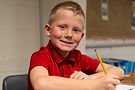
4th Grade
-
Types of sentences and how they are used
-
Parts of speech
-
Spelling and grammar
-
Sentence diagramming
-
Essay Writing
-
Types of writing: opinion, informative/explanatory, narrative, report, opinion, response writing
-
Novels
-
Types of reading: realistic fiction, fantasy, historical fiction, biographies, lives of the saints, fiction, non-fiction
-
Comprehension
-
Character analysis, author's perspective, symbolism, plot development, themes
-
-
Corporal and Spiritual Works of Mercy
-
Beatitudes
-
Ten Commandments
-
Birth and growth of the Catholic Church
-
History of the Catholic Church in Colorado
-
Gospel history and stories
-
The sacraments
-
The moral life
-
Prayer
-
Lives of the saints and the virtues for which to strive
-
Daily rosary
-
Weekly Mass and Adoration
-
-
Place value and comparing whole numbers
-
Operations of addition, subtraction, multi-digit multiplication, and long division
-
Fractions
-
Continued introduction to geometry
-
Measurement
-
Probability
-
-
American Exploration and Colorado History
-
Ancient Peoples of North America
-
Pueblo People
-
Conquistadors and Exploration
-
Spanish Missions and Franciscans
-
French Explorers and Evangelization
-
Colorado through the 1800s-1900s
-
Geography of Colorado
-
Colorado Symbols and Landmarks and Government
-
-
Understanding and protecting our environment
-
Climate, weather, and water cycles
-
Conservation of natural resources
-
Stewardship of the environment
-
Living things and their interactions with the environment
-
Ecosystems, food webs, food chains, photosynthesis
-
Biodiversity, adaptation, extinction
-
Properties of matter
-
5th Grade
-
Continued grammar, punctuation, vocabulary, and spelling development
-
parts of speech
-
Writing conventions- mechanics and usage
-
Reading comprehension
-
Book projects
-
Personal narratives, opinion writing, persuasive writing, research
-
Creative writing and poetry
-
Types of reading: realistic fiction, non-fiction/informational text, historical fiction, science fiction
-
Point-of-view, figurative language, sequencing, sensory description, compare & contrast
-
Identifying aim, purpose, audience, supporting details in writing
-
Note-taking
-
-
Living the Gospel life
-
Understanding scripture passages
-
Lives of saints and their role in the Church
-
Sacraments
-
Sanctifying, actual and sacramental grace
-
Deepening one’s prayer life
-
The Beatitudes
-
Fruits and Gifts of the Holy Spirit
-
Stewardship and Dignity of Human Life
-
Weekly liturgy and adoration
-
Daily rosary
-
-
Mastery of basic facts (addition, subtraction, multiplication and division)
-
Properties and rules in addition and subtraction
-
Estimation
-
Subtraction with borrowing
-
Multiplication and division properties, two and three digits including decimals
-
Divisibility rules and number sense
-
Adding, subtracting, multiplying and dividing fractions
-
Mixed number ordering
-
Prime and composite numbers
-
Probability and statistics
-
Adding and subtracting decimals
-
Geometric properties and formulas
-
Introduction to algebra
-
Mathematical thinking and problem solving
-
-
From 500 AD through the American Civil War, including:
-
Exploration and colonization of the New World
-
The role of the Church in expansion
-
Growth and formation of the US
-
Spread of Christianity in the New World
-
The structure of US government
-
Declaration of Independence
-
Constitution
-
Articles of Confederation
-
American civilization form the Age of Exploration to the Civil War
-
-
Cellular life
-
Classification and Identification of living species
-
Human Body Systems
-
Weather and weather patterns
-
Types of matter, physical and chemical changes
-
Force and energy
-
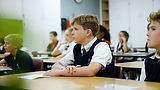
6th Grade
-
Old Testament
-
Introduction to the 10 Commandments
-
Introduction to the sacraments
-
Introduction to theology of the body
-
History of the Church in the classic world
-
Introduction to logic
-
-
Exponentials and real numbers
-
Integer addition and subtraction
-
Geometry
-
Interpretation of graphs
-
Introduction to algebra
-
Probability
-
Formulas to solve problems
-
-
Engage with Truth and the human experience: Analyze carefully chosen fiction and non-fiction that reflect a Catholic culture and worldview, revealing authentic Truth and the nature of the human person.
-
Cultivate virtue and moral insight: Explore literature that illuminates human struggles, choices, and ideals, inspiring students to grow in virtue, empathy, compassion, and self-understanding.
-
Foster harmony and community: Use literature to help students appreciate how stories guide individuals to live harmoniously with others and take a stand for love, faith, courage, fidelity, beauty, and goodness.
-
Delight in beauty and craftsmanship: Share beautifully crafted works—stories, poems, plays, and essays—that display unity, harmony, and radiance of form, nurturing wonder and a love of reading.
-
Analysis of Truth and worldview: Students analyze carefully selected literary works, both fiction and non-fiction, that transmit a Catholic culture and worldview and lead to the discovery of authentic Truth.
-
Understanding the human person: Through literature, students examine the proper nature of the human person, human struggles, and the pursuit of self-knowledge and human flourishing.
-
Moral formation and social harmony: Literary study fosters empathy, moral reflection, and the cultivation of virtue, guiding students to live harmoniously with others and to uphold values such as love, faith, courage, fidelity, truth, beauty, and goodness.
-
Appreciation of literary excellence: Students engage with beautifully crafted texts that demonstrate unity, harmony, and radiance of form, developing intellectual delight, wonder, and a lasting appreciation for literature.
-
-
Historical geography
-
Ancient Mediterranean civilizations
-
Early trade and cross-cultural contact
-
Development of ancient law and civics
-
The rise and fall of ancient civilizations
-
The origins of Salvation history
-
Earth Science:
-
Mapping of the Earth Surface
-
Plate Tectonics
-
Rocks & Minerals
-
Weather & Climate
-
Earth's Waters
-
Natural Resources
-
Forces that Shape the Earth
-
Earth's History
-
Earth's Atmosphere
-
Astronomy & Space
-
Foundations of Grammar and Organized Writing
-
Sixth grade establishes the essential structures of correct written expression. Students focus on sentence-level accuracy, clear organization of ideas, and the beginnings of formal composition.
-
Students will:
-
Apply core principles of grammar and sentence construction to produce complete, correct sentences
-
Develop structured paragraphs and short compositions built around a clear central idea
-
Write organized, explanatory, and argumentative pieces that:
-
introduce a clear claim or topic
-
present logically ordered reasons or information
-
support ideas with an appropriate explanation
-
-
-
This year builds the habits of order, clarity, and correctness that support all future writing.
-

7th Grade
-
New Testament
-
The Creed
-
Christology
-
Mariology
-
Christian morality
-
Theology of the body
-
Eschatology
-
History of the Church in the Middle Ages
-
History of philosophy
-
-
Square roots
-
All functions applied to negative numbers
-
Calculating area using geometric tools
-
Pythagorean Theorem
-
Probability, statistics, and the analysis of data
-
Applying algebraic expressions
-
Rational and irrational numbers
-
-
Engage with Truth and the human experience: Analyze carefully chosen fiction and non-fiction that reflect a Catholic culture and worldview, revealing authentic Truth and the nature of the human person.
-
Cultivate virtue and moral insight: Explore literature that illuminates human struggles, choices, and ideals, inspiring students to grow in virtue, empathy, compassion, and self-understanding.
-
Foster harmony and community: Use literature to help students appreciate how stories guide individuals to live harmoniously with others and take a stand for love, faith, courage, fidelity, beauty, and goodness.
-
Delight in beauty and craftsmanship: Share beautifully crafted works—stories, poems, plays, and essays—that display unity, harmony, and radiance of form, nurturing wonder and a love of reading.
-
Analysis of Truth and worldview: Students analyze carefully selected literary works, both fiction and non-fiction, that transmit a Catholic culture and worldview and lead to the discovery of authentic Truth.
-
Understanding the human person: Through literature, students examine the proper nature of the human person, human struggles, and the pursuit of self-knowledge and human flourishing.
-
Moral formation and social harmony: Literary study fosters empathy, moral reflection, and the cultivation of virtue, guiding students to live harmoniously with others and to uphold values such as love, faith, courage, fidelity, truth, beauty, and goodness.
-
Appreciation of literary excellence: Students engage with beautifully crafted texts that demonstrate unity, harmony, and radiance of form, developing intellectual delight, wonder, and a lasting appreciation for literature.
-
-
Medieval history
-
Medieval literature and culture
-
The development of Christendom
-
History of the Catholic Church
-
The spread of Christianity
-
Interfaith contact and conflict in the Middle Ages
-
The origins of modern European nations
-
Life Science
-
Cells
-
Genetics
-
Microbial World- Bacteria, viruses, fungi
-
Animal Diversity
-
Vertebrates
-
Invertebrates
-
Ecology
-
Plants
-
Human impact
-
Human Body & Reproduction
-
Precision in Grammar and Clarity in Style
-
Seventh grade deepens grammatical mastery and refines written expression, enabling students to transition from simple correctness to intentional and expressive style.
-
Students will:
-
Analyze and apply the function of phrases and clauses within complete sentences
-
Correctly use key grammatical structures, including:
-
predicate nominatives
-
predicate adjectives
-
direct and indirect objects
-
-
-
Strengthen composition through concise wording, elimination of redundancy, and improved sentence variety
-
By the end of the year, students demonstrate greater control over language, clearer organization of ideas, and more polished written communication.
-
8th Grade
-
The Fathers of the Church
-
Sacraments
-
Ecclesiology
-
Social doctrine of the Church
-
Apologetics
-
The nature of God
-
The 10 Commandments
-
History of the Church in the modern and contemporary world
-
Syllogisms and logical thinking
-
Some topics of philosophy
-
Faith and reason
-
-
Algebra 1
-
Algebraic logic
-
Simple aspects of logical argumentation
-
Linear equations and functions
-
Proportional reasoning
-
Systems of equations
-
Polynomials
-
Factoring
-
Quadratic functions
-
Rational expressions and equations
-
-
Engage with Truth and the human experience: Analyze carefully chosen fiction and non-fiction that reflect a Catholic culture and worldview, revealing authentic Truth and the nature of the human person.
-
Cultivate virtue and moral insight: Explore literature that illuminates human struggles, choices, and ideals, inspiring students to grow in virtue, empathy, compassion, and self-understanding.
-
Foster harmony and community: Use literature to help students appreciate how stories guide individuals to live harmoniously with others and take a stand for love, faith, courage, fidelity, beauty, and goodness.
-
Delight in beauty and craftsmanship: Share beautifully crafted works—stories, poems, plays, and essays—that display unity, harmony, and radiance of form, nurturing wonder and a love of reading.
-
Analysis of Truth and worldview: Students analyze carefully selected literary works, both fiction and non-fiction, that transmit a Catholic culture and worldview and lead to the discovery of authentic Truth.
-
Understanding the human person: Through literature, students examine the proper nature of the human person, human struggles, and the pursuit of self-knowledge and human flourishing.
-
Moral formation and social harmony: Literary study fosters empathy, moral reflection, and the cultivation of virtue, guiding students to live harmoniously with others and to uphold values such as love, faith, courage, fidelity, truth, beauty, and goodness.
-
Appreciation of literary excellence: Students engage with beautifully crafted texts that demonstrate unity, harmony, and radiance of form, developing intellectual delight, wonder, and a lasting appreciation for literature.
-
-
The Renaissance and the Reformation
-
Modern historical geography
-
European expansion and trade around the world
-
American and Western world history
-
American government and the Constitution
-
The modernization of society through industrialization and social and political changes
-
The rise of modern socio-political ideologies
-
Respect and understanding of cultures different from one’s own
-
Physical Science (Physics & Chemistry)
-
Atoms & Periodic table
-
Matter
-
Chemical Bonds
-
Acids & Bases
-
Electricity & Magnetism
-
Force & Motion
-
Sound, light & mirrors
-
Thermal energy
-
Energy & Simple Machines
-
Waves & Electromagnetic spectrum
-
Rhetoric, Research Writing, and Mature Composition
-
Eighth grade prepares students for the demands of high school through sustained writing, disciplined organization, and purposeful rhetorical development.
-
Students will:
-
Conduct short, focused research writing that responds to a clear question and develops logically organized ideas
-
Produce compositions in which organization, development, substance, and style match task, purpose, and audience
-
Use advanced structural techniques to:
-
create a clear progression of ideas
-
manage transitions effectively
-
demonstrate coherence across paragraphs and full essays
-
-
-
This culminating year forms students who can write with clarity, argue with reason, and present ideas with maturity and confidence.
-